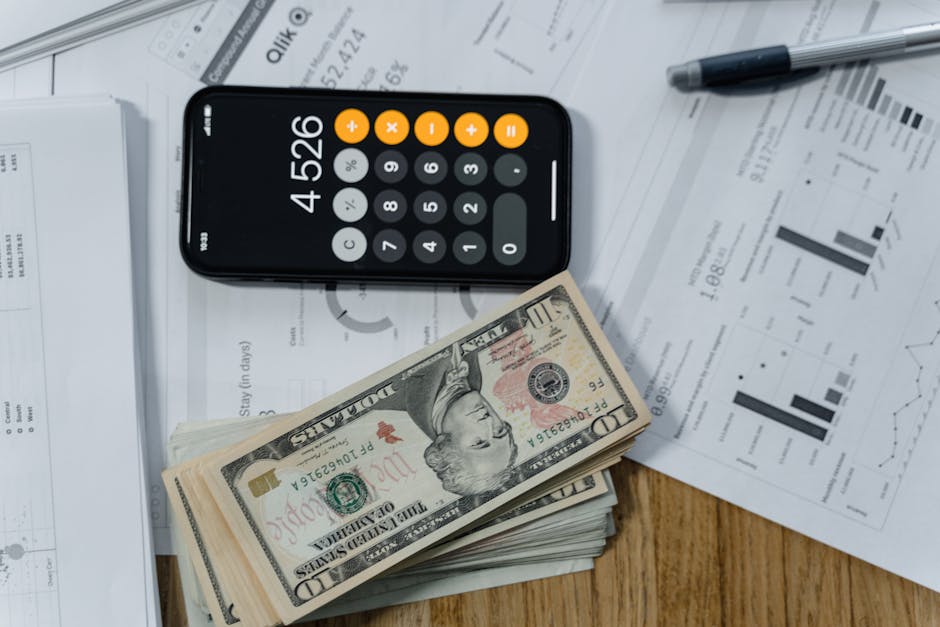
Photo by cottonbro studio on Pexels
Best AI Budgeting Apps That Actually Save Money
AI budgeting apps promise to analyze your spending, flag waste, and auto-save on your behalf — but do they deliver? We compare the top tools to see which ones genuinely move the needle on your bank balance.
The Best AI Budgeting Apps for Saving Money (And Why Most People Pick the Wrong One)
The average American saves less than 5% of their income. AI budgeting apps have been around for over a decade. These two facts do not add up — unless the apps most people choose aren't actually solving their real problem.
After testing the top options on the market, one thing became clear: the best AI budgeting app for saving money isn't the smartest one. It's the one that matches how your brain actually works.
Two categories dominate the space. AI-first apps like Copilot Money and Monarch Money automate everything and strip out friction. YNAB removes nothing — it makes you work, deliberately, and that friction is the product. Knowing which one fits you matters more than which one scores higher in a feature comparison.
How They Stack Up
 Photo by AlphaTradeZone on Pexels
| | AI-First (Copilot, Monarch) | Rules-Based (YNAB) | |---|---|---| | Setup time | ~20 minutes | 2–3 hours upfront | | Weekly time commitment | ~5 minutes | 20–30 minutes | | Best for | Awareness, visibility, couples | Debt payoff, behavior change | | Savings potential | Moderate | High | | Monthly cost | $8–13 | $15 | | Who quits | Rarely | Often — but those who stay save significantly more |
Copilot and Monarch: Automation as the Product
Traditional budgeting fails because of friction. You forget to log the coffee. You avoid the app after a bad spending week. You update the spreadsheet twice in January and never again.
Copilot Money and Monarch Money solve this by making the data exist without you. Connect your accounts, and within 20 minutes you have a complete picture of every transaction, auto-categorized and sorted. Copilot's categorization engine is sharp enough to distinguish your Wednesday Trader Joe's run as groceries rather than dining — and it gets better over time. You don't teach it. It figures it out.
What these apps actually deliver is awareness. Over 90% of people who track their spending for one month report being surprised by at least one category. Not because they're careless — because spending is invisible until someone makes you look at it.
Monarch goes further. It adds net worth tracking, cash flow projections, and a shared dashboard designed for couples or households managing finances together. It models what happens to your money if current patterns continue. That's useful not because it tells you things you couldn't figure out, but because it makes the math unavoidable.
The limitation neither company puts in their marketing: awareness without a rule doesn't change much for people who already know they overspend. If you know the problem and keep doing it anyway, one more spending chart won't interrupt that loop.
These apps work well for variable-income earners — freelancers, contractors, anyone with month-to-month swings. The automatic income tracking and cash flow comparisons are genuinely hard to replicate manually without real effort.
YNAB: The App That Makes You Uncomfortable on Purpose
 Photo by SHVETS production on Pexels
YNAB — You Need a Budget — is the most opinionated tool in personal finance. It doesn't track your spending after the fact. It makes you assign every dollar a job before you spend it.
The method is zero-based budgeting: income minus every budgeted category equals zero. Before the month starts, you allocate $400 to groceries, $200 to dining, $80 to subscriptions. When you spend, you log it against that category. When groceries hits zero, it's gone — and the only way to keep spending is to consciously pull money from somewhere else.
That friction is the point.
Behavioral economists call this effect mental accounting. When money is labeled — even artificially — it gets spent differently. Research on earmarked savings consistently shows that people who assign funds to specific goals save meaningfully more than those who keep money in a general pool. YNAB builds that finding directly into your daily routine.
The results are measurable. YNAB's internal data shows new users save an average of $600 in their first two months — a figure consistent enough to appear across independent reviews and financial forums, not just the company's own marketing.
The tradeoff is real: 20–30 minutes a week, every week. You reconcile. You adjust. You face every blown category by name. People who stick with YNAB for 90 days tend to become permanent users. People who start cold in February, during tax season, with no prior zero-based budgeting experience — many don't make it.
Pick the Right One for Your Actual Problem
Two examples make the choice concrete.
Person A earns $68,000, consistently overspends on food delivery and Amazon, and knows exactly where the money goes. They don't have a visibility problem. They need YNAB. The behavior is the problem, and YNAB's built-in friction is the only mechanism here that will interrupt an impulse before it completes.
Person B is in a dual-income household pulling $150K combined. Decent savings rate. No clear picture of their net worth, their combined cash flow, or whether they're on track for any goal. They need Monarch. The awareness gap is real, and Monarch closes it in a weekend without requiring a new relationship with money.
Go with Copilot or Monarch if:
- You want financial visibility without changing your habits
- You're managing finances with a partner and need shared tracking
- Your income varies month to month
- You've never successfully stuck with a budget and want a low-friction start
Go with YNAB if:
- You're carrying credit card debt and want a concrete payoff plan
- You've already tried passive tracking apps and nothing changed
- You make impulse purchases and need guardrails, not just data
- You're building financial habits from scratch and want the strongest foundation
Which Is Actually Best for Saving Money
The best AI budgeting apps for saving money are best because they fit the problem — not because of their feature sets.
If you don't know where your money goes, Copilot or Monarch will show you clearly, automatically, and with almost no ongoing effort. That visibility alone is worth $10/month for most people who've never tracked before.
If you know exactly where your money goes and can't stop it, YNAB is the only app in this category that actually interrupts the pattern. It costs more time, but the mechanism is real and the data backs it up.
The worst outcome: $10/month for an app you open twice, decide isn't working, and cancel. It didn't work because the problem wasn't defined first. Figure out whether you have a visibility problem or a behavior problem. Then pick the tool built for that specific job.