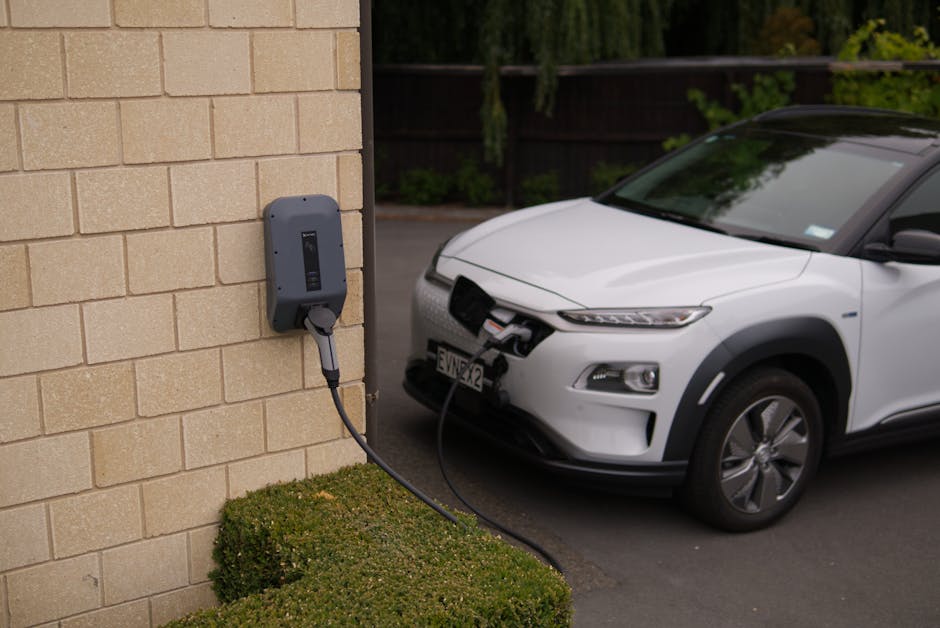
Photo by Ed Harvey on Pexels
How Chinese EVs Are Reshaping the Global Market
Explore how Chinese electric vehicles are redefining affordability and competitiveness in the global automotive industry, and what it means for the future of sustainable transport.
How Chinese EVs Are Reshaping the Global Marketplace
In an electrifying twist to the global auto market narrative, China has raced ahead to become the world's premier exporter of electric vehicles, sending over three million units abroad last year. This isn't just about numbers. It's about a tectonic shift driven by remarkably affordable EVs that are no longer just options for the budget-conscious, but are also sparking serious interest among tech-savvy consumers and business strategists worldwide.
The New Reality
China's rise as an electric vehicle powerhouse is no accident. Behind the scenes, a tapestry of government policies, massive investments, and a vibrant domestic economy weave together to propel their EVs onto the global stage. But it’s the fresh and aggressive entry into foreign markets that is shifting tectonic plates beneath well-established automotive giants. From Europe to Africa, Chinese EVs are not merely present; they're redefining cost-benefit paradigms.
Consider France, a nation renowned for its own automotive legacy, where Chinese EVs like the MG ZS EV are swaying consumer decisions with prices significantly below local counterparts. Meanwhile, in energy-conscious Germany, these cars bring a new kind of pragmatism to price-sensitive buyers. This isn't just a business strategy—it's a move that aligns Chinese economic prowess with a global yearning for affordable green alternatives.
Why It Matters Now
 Photo by 04iraq on Pexels
The green transition is moving from urgent rhetoric to palpable reality. Every automaker jostles for a slice of the growing EV pie, against a backdrop of tightening emission standards and increased climate awareness. Enter the Chinese manufacturers who have fast-tracked their game plan, delivering cost-effective models that might still leave many Western automakers scrambling to catch up.
Take, for example, the Chinese company BYD, adopting Tesla's direct-to-consumer sales model while successfully keeping production costs rock-bottom. Their electric buses and vehicles are already revolutionizing public transport grids in Latin America, with a recent large-scale deal in Colombia, challenging local regulators to rethink urban transit policies.
The Historical Echo
This isn't the first time we've seen such a shakeup. In a story echoing Japan's rise with compact and efficient vehicles in the 1970s, Chinese EVs are playing a similar role today. With a rich history of rapidly evolving industrial lines, China now stands at the forefront of a clean car revolution.
It's a strategy baked in policy and ambition. Over a decade ago, environmental initiatives were revved up with heavy funding in renewable energy infrastructure. The result? A well-oiled machine poised to lead us into this new age of mobility.
The Road Ahead
 Photo by Kindel Media on Pexels
China's eyeing not merely membership but dominance in the EV innovation club. Regulations and trade policies will likely shuffle as Chinese cars roll into the driveways of consumers in new markets. Watch for shifts in the global supply chain, especially around battery technology where China holds a pivotal role. Western nations may look at alternatives or incentivize domestic production.
Equally worth watching is consumer behavior. Will the lure of affordability eclipse brand loyalty? As Chinese technological advancements continue, particularly in AI integration and battery efficiency, we might see a total reshuffle of what buyers prioritize.
A New Drive for Success
The narrative of affordable Chinese EVs extends beyond a simple market disruption. It's a compelling story of innovation, accessibility, and the strategic deconstruction of market norms. Investors glued to industry trends should ponder the exponential growth potential within this segment, where affordability and advanced technology intersect. Chinese EVs aren't just options— they’re front-runners, rewriting the rules of automotive raceways worldwide. In this climate, adaptability isn't just an advantage; it's essential.
Understanding this, companies ready to pivot with these changing tides, embracing both sustainable practices and strategic international moves, stand to capture unimaginable growth and enduring relevance in transforming global mobility.